
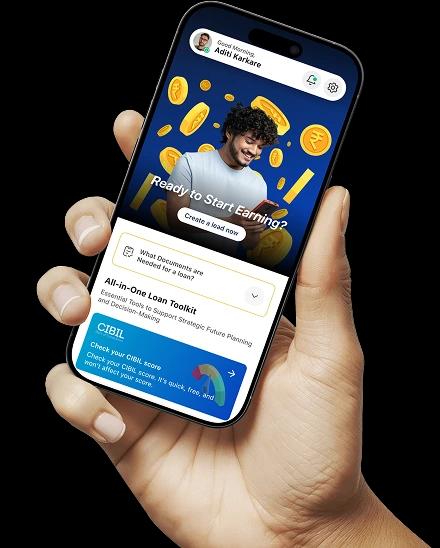

Aavas Financiers Limited is a retail-focused affordable housing finance company (HFC) headquartered in Jaipur, Rajasthan, India. It specialises in providing home loans to low and middle-income customers particularly in semi-urban and rural areas who are often underserved by traditional banks and large HFCs.
Aavas Financiers has carved a unique niche in India's affordable housing landscape by providing credit access to borrowers who are typically excluded from the formal financial system. It exemplifies how specialised HFCs contribute to the 'Housing for All' mission.

Digital Transformation
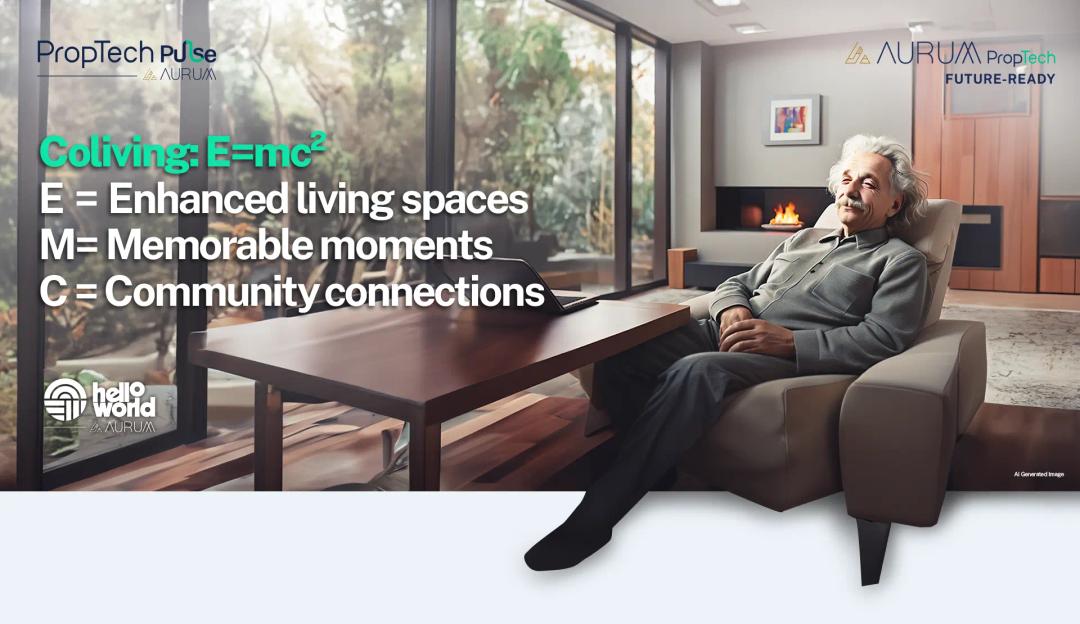
Dear Young Albert, I hope this letter finds you well, filled with the same curiosity and wonder that has always driven you. As I reflect on the world today, I can't help but think about how much has changed since my time, especially in the realm of communal living which might seem quite intriguing to you. You see, much like the principles of relativity that I delved into in my time, co-living operates on the idea of interconnectedness. Just as I discovered that the laws of physics are the same for all observers, regardless of their relative motion, co-living emphasizes the equality and inclusivity of all residents. Regardless of background or circumstance, everyone contributes to and benefits from the community space. These co-living spaces foster a sense of belonging and support that is invaluable, especially in today's fast-paced world. Just as I contemplated the effects of gravity on the motion of celestial bodies, consider the "community gravity" within a co-living space — the connections and relationships that draw residents together, enriching their lives in ways they never thought possible. Moreover, in these co-living spaces, one finds a beautiful confluence of diversity. Each resident brings their own unique perspective, skills, and passions to the table. Just as I theorized that the curvature of spacetime depends on the distribution of mass and energy, the social "space" within a co-living community is shaped by the collective presence of its members. This diversity creates an environment ripe for collaboration, innovation, and personal growth. Young Albert, Technology has altered Co-living manifold enabling students and young professionals discover, access and live in shared spaces at a touch of their fingertips. We individuals, each with their unique stories, come together to create a community unlike any other. It's not just about sharing physical space; it's about sharing ideas, dreams, and aspirations. So, my dear young Albert, as I continue to explore the wonders of the universe co-living has given me an opportunity to connect with likeminded others, to learn from them, and to grow together. Remember that just as the universe is vast and ever-expanding, so too are the opportunities for meaningful connections and shared experiences in the world around you. With warm regards, Your Future Self
15th March 2024

Technology and Innovation
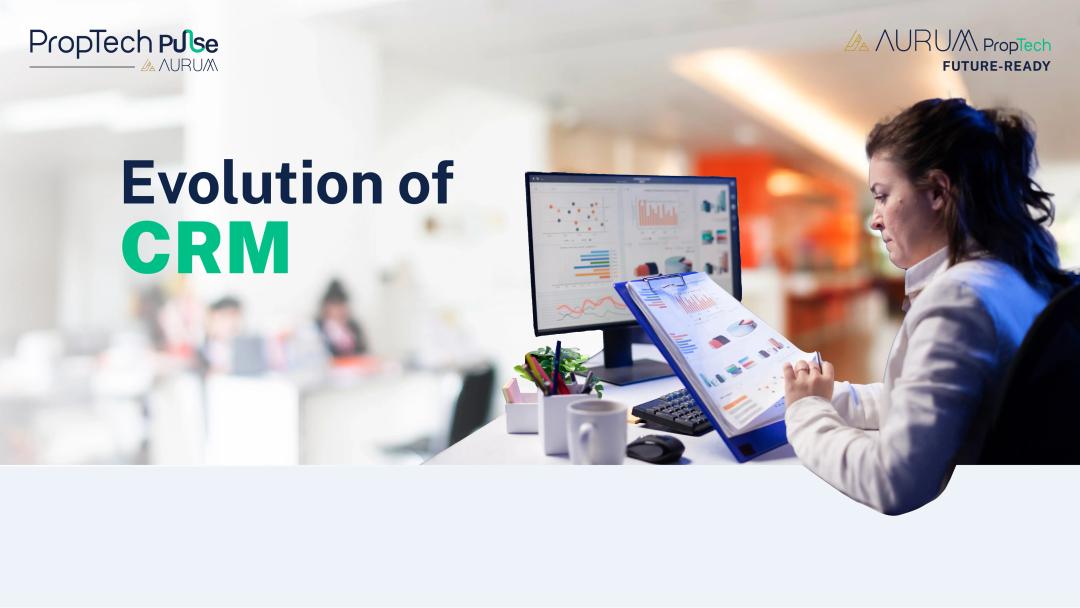
‘‘The purpose of a business is to create and keep a customer’’, Peter Drucker, a famous writer, and management consultant said prolifically. The realm of CRM scope covers customer discovery, interactions, service, care, retention, and loyalty. The term Customer Relationship Management (CRM) was coined in the early 1970s when management at business units realized it would be better to be customer emphatic rather than product emphatic. Customer relationship management tools has evolved gradually from Rolodex’s of 1950s to Generative AI in 2020. What started as a record-keeping tool gradually evolved into digital documentation, sales automation, enterprise resource planning, social marketing, to the present age hyper personalised automated communication form. 1956 - First CRM Gadget - Rolodex In 1956s, Danish engineer Hildaur Neilsen, chief engineer of Zephyr American invented Rolodex, a card index system used to store customer contact information. It was a desk gadget that stacked and stored business cards and index cards that people could spin and flip through. Digital Rolodex, Tele sales and advent of computers The 1980s saw an evolution in sales, marketing and customer retention tactics with the advent of digitisation. Tools such as direct mail, brochures, and product catalogues being sent to a database of customers to get them to buy something were prevalently used in the 1980s. Database marketing and digital Rolodex came to the fore. The late 1980s saw the advent of telesales for customer communication. Computers were also accessible for enterprises and became a means of storing information about customers. In 1987, the software programme ACT (Activity Control Technology) was created by Mike Sullivan and Mitch Muhney, officially known as the first CRM software. This was essentially a digital Rolodex that allowed storage and management of the entire customer lifecycle information on the software. With its usage of Customer Relationship Management software, Act! demonstrated the advantages of scalable software that utilized consumer information to help a firm better manage its connections. 1990 - Sales Automation and progression into CRM systems By 1990s, one saw a progression of database management into customer lifecycle management and sales force workflow automation. Tools like enterprise resource planning, and marketing were added to the software’s contact management functions. This was the emergence first CRM systems. Tom Siebel, founder of Sieble Systems, coined the term CRM (Customer Relationship Software) for the first time. The post-introduction of the same CRM took off exponentially, with other companies also providing CRM solutions. Siebel Systems was later acquired by Oracle for over USD 5 billion in 2005. Late 1900s - First Mobile CRM, SaaS business model and Salesforce Inc. Post invention of PDA (Personal Digital Assistant) devices, tasks, emails, and calendar management became mobile. It allowed sales individuals to access customer data from central databases on the go, which proved to be a game changer as one didn’t have to be on the desk to work out these tasks. Salesforce.com was launched in 1999 and offered a new business model, offering software services as subscriptions (SaaS), wherein the upfront implementation cost, effort, and maintenance would be taken care of by Salesforce. 2000 - Cloud based CRM, Open-Source CRM and Social CRM In 2007, internet boom and cloud storage led to the advent and proliferation of Cloud-based CRM. With the increased internet adoption, Salesforce’s subscription model became popular as it could be scaled up very quickly. Open-source software also came to the fore, with the most prominent one being Sugar CRM, invented by computer scientists and ex-IBM and Hewlett-Packard employees Clint Oram, John Roberts, and Jacob Taylor. With the increased proliferation, and exponential growth of social media platforms, CRMs were combined with social media tools to offer SCRM. 2010 - Artificial Intelligence and CRM Artificial intelligence (AI) has changed the CRM space substantially with automation and intelligence. AI can be used for lead scoring, identifying customer needs, and providing recommendations. With enormous data being generated across every consumer by way of their digital footprint, CRM with AI and data analytics makes it simple to extrapolate consumer behaviour and requirements in real-time. 2020 and Now - Generative AI Generative AI is a subset of AI but unique in its ability to learn from underlying patterns to create new data that mirrors the training data set. The power of creation has a multifold impact across industries, and consumer communication is only to benefit from this capability. Managing customer interactions with Gen AI has the potential to enable a better connection between brands and customers. This however requires creative ability to engage customers and ability to execute to deliver better performance results and employee experiences. A combination of Gen AI and CRM can impact functional domains of marketing, sales, commerce, service and customer success. The true potential of Gen AI can be unlocked best when used in combination with predictive AI, voice to text, experience management and workflow optimisation. The CRM journey has reached an interesting point with AI, and the future looks promising for this space. The Total Addressable Market is set to grow to USD 290 billion by 2026. Salesforce Inc, an early mover, and a global market leader grew 10x in revenue in a decade. In 2013, its revenue stood at USD 3.1 billion which stands at USD 34 billion in FY 2022. CRM, which started as a simple Rolodex, has evolved into a complex system laced with artificial intelligence that helps organisations manage customer data and engage them with it in a self-assisted automated format, bringing huge implications for cost, efficiency, and the experience of consumer communication. As we advance further into the coming decades, CRM software systems will become more intelligent, integrated and intuitive with powerful AI capabilities, greater emphasis on self-service, enhanced experience for customers, hyper-personalisation, integrated API networks and ecosystems, and a single source of truth for businesses. Peter Drucker will be smiling in his grave looking at the advancement in this space.
12th April 2024

Growth
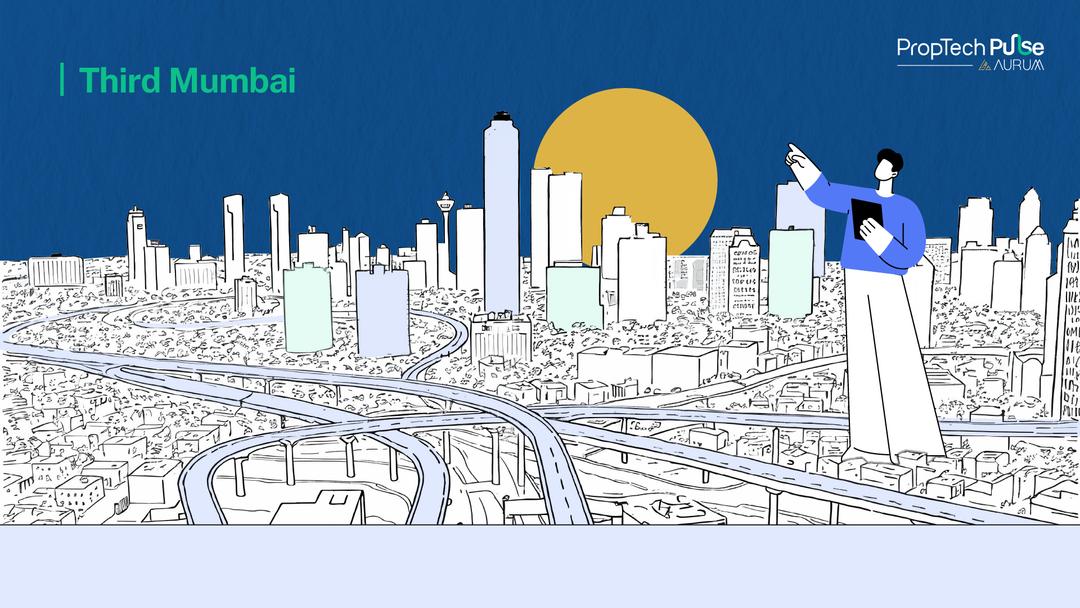
Third Mumbai: India’s Largest Planned Urban Transformation India’s urban story is one of both remarkable growth and immense pressure. Nowhere is this duality more visible than in Mumbai — the nation’s financial capital, home to over 20 million people, and the generator of 6.2% of India’s GDP. Yet, as the city continues to stretch its limits, housing has become unaffordable, and infrastructure is under constant strain. Navi Mumbai, originally planned as the relief valve, is now fast approaching saturation. So, what’s the next frontier in urban development? Welcome to Third Mumbai — officially known as the Karnala Sai Chirner (KSC) New Town — India’s most ambitious and largest planned urban development initiative. With a vision rooted in sustainability, smart infrastructure, and economic inclusion, Third Mumbai aims to reshape the future of urban living in the Mumbai Metropolitan Region (MMR). Why Third Mumbai? The urgency behind the creation of Third Mumbai stems from Mumbai's expanding population and the strain on its infrastructure. As residential spaces become prohibitively expensive and the quality of life diminishes due to congestion and pollution, planners have looked eastward to Raigad district. Third Mumbai isn’t just a spillover zone — it’s a solution. Envisioned as a self-sustaining smart city, it will ease pressure off Mumbai and Navi Mumbai, while fueling the next wave of economic growth, urban innovation, and regional connectivity. What is Third Mumbai? The Third Mumbai project is centered on three towns: Karnala, Sai, and Chirner — collectively abbreviated as KSC. This geographical triad forms the backbone of the new city. The initiative spans approximately 332 square kilometers, integrating areas from 124 villages in the Uran, Panvel, and Pen talukas of Raigad district. It also falls under the NAINA (Navi Mumbai Airport Influence Notified Area), leveraging its strategic location and potential for seamless multimodal connectivity. A Game-Changing Location What makes Third Mumbai such a game-changer is its location. The region is being built near key transit and economic hubs: Proximity to the Navi Mumbai International Airport — which is set to become operational by July 2025 Access to the Mumbai Trans Harbour Link (MTHL) — a 21.8 km sea bridge that will cut travel time between Mumbai and Navi Mumbai to just 20 minutes Planned Gold Line Metro (Line 8) — a direct metro route between CSMIA Terminal 2 and the new airport These elements will ensure that Third Mumbai isn’t just connected — it’s hyper-connected. Connectivity: The Infrastructure Backbone Third Mumbai’s infrastructural promise lies in three transformative projects: Mumbai Trans Harbour Link (MTHL) Length: 21.8 km Connects: Mumbai to Navi Mumbai Impact: Travel time reduced from 2 hours to just 20 minutes, improving both cargo movement and daily commutes. Navi Mumbai International Airport Opening: Expected by July 2025 Impact: Eases burden on Mumbai’s Chhatrapati Shivaji Maharaj International Airport while acting as an anchor for the new city. Gold Line Metro (Line 8) Route: Connects CSMIA Terminal 2 with Navi Mumbai Airport Impact: Seamless inter-airport connectivity, enhancing regional and global business travel. Together, these projects will integrate Third Mumbai with the broader MMR, unlocking unprecedented economic and logistic potential. Governance and Planning To ensure that the development remains structured, legal, and sustainable, the New Town Development Authority (NTDA) has been constituted. The NTDA operates under the Maharashtra Regional and Town Planning (MRTP) Act, 1966, which provides legal backing for: Zoning regulations Urban layout Land acquisition Infrastructure development This governance model ensures that growth doesn’t spiral into chaos — a lesson learned from the unregulated expansion in many Indian cities. What Will Third Mumbai Offer? Third Mumbai isn’t just a housing scheme or a transportation hub — it’s an ecosystem. The city is being developed with sector-specific innovation zones that make it a magnet for future-ready investments. Edu-City Home to the campuses of the top five global universities, Edu-City will be the education nucleus of the region, attracting students from across India and abroad. Medi-City A hub of world-class hospitals, medical research centers, and advanced health tech startups. Medi-City will help decentralize Mumbai’s overburdened healthcare system while making Third Mumbai a destination for medical tourism. Global Capability Centers (GCCs) Supported by ₹4 lakh crore worth of MoUs signed by MMRDA, Third Mumbai will house major GCCs, boosting employment, exports, and local GDP. SEZs and Data Centres Smart Integration of residential, commercial, and green zones. Hosting India’s largest data centres, the region is expected to hold up to 65% of India’s future data storage capacity, making it a digital powerhouse. The Economic Multiplier With an anchor investment of ₹16,700 crore for the Navi Mumbai Airport and strategic planning across multiple sectors, Third Mumbai is expected to: Attract multi-billion-dollar investments Generate lakhs of jobs across IT, manufacturing, logistics, and services Significantly boost property values and business activity in the Raigad district Furthermore, by being a Special Economic Zone (SEZ) corridor, Third Mumbai is expected to become a business-friendly jurisdiction with tax incentives and ease-of-doing-business protocols. A Template for Future Cities What makes Third Mumbai more than just another urban project is its replicability. Its model — combining connectivity, zoning, education, health, sustainability, and governance — serves as a template for future cities in India. As urbanization accelerates, India needs more cities that are planned ahead of population influx, not after. Third Mumbai demonstrates that with the right vision and framework, Indian cities can be inclusive, tech-forward, and sustainable — all at once. The Road Ahead With 2025 marking the expected operational launch of the Navi Mumbai International Airport, the countdown to Third Mumbai’s emergence has already begun. Over the next decade, the area will witness rapid transformation — from village clusters to a thriving metropolis. Of course, challenges remain — environmental sustainability, rehabilitation of existing villagers, and timely execution of infrastructure. But with a clear master plan and government backing, Third Mumbai may well be India’s most successful urban experiment. Final Thoughts As India steps into a new era of urbanization, the idea of Third Mumbai shines as a beacon of smart growth, equitable development, and forward-thinking governance. For real estate investors, entrepreneurs, educators, and city planners — this is a once-in-a-generation opportunity. Third Mumbai is not just a city. It’s India’s future — planned today. For more such insights into the world of real estate and PropTech, follow PropTech Pulse
29th September 2025

Digital Transformation
Dear Young Albert, I hope this letter finds you well, filled with the same curiosity and wonder that has always driven you. As I reflect on the world today, I can't help but think about how much has changed since my time, especially in the realm of communal living which might seem quite intriguing to you. You see, much like the principles of relativity that I delved into in my time, co-living operates on the idea of interconnectedness. Just as I discovered that the laws of physics are the same for all observers, regardless of their relative motion, co-living emphasizes the equality and inclusivity of all residents. Regardless of background or circumstance, everyone contributes to and benefits from the community space. These co-living spaces foster a sense of belonging and support that is invaluable, especially in today's fast-paced world. Just as I contemplated the effects of gravity on the motion of celestial bodies, consider the "community gravity" within a co-living space — the connections and relationships that draw residents together, enriching their lives in ways they never thought possible. Moreover, in these co-living spaces, one finds a beautiful confluence of diversity. Each resident brings their own unique perspective, skills, and passions to the table. Just as I theorized that the curvature of spacetime depends on the distribution of mass and energy, the social "space" within a co-living community is shaped by the collective presence of its members. This diversity creates an environment ripe for collaboration, innovation, and personal growth. Young Albert, Technology has altered Co-living manifold enabling students and young professionals discover, access and live in shared spaces at a touch of their fingertips. We individuals, each with their unique stories, come together to create a community unlike any other. It's not just about sharing physical space; it's about sharing ideas, dreams, and aspirations. So, my dear young Albert, as I continue to explore the wonders of the universe co-living has given me an opportunity to connect with likeminded others, to learn from them, and to grow together. Remember that just as the universe is vast and ever-expanding, so too are the opportunities for meaningful connections and shared experiences in the world around you. With warm regards, Your Future Self
15th March 2024

Technology and Innovation
‘‘The purpose of a business is to create and keep a customer’’, Peter Drucker, a famous writer, and management consultant said prolifically. The realm of CRM scope covers customer discovery, interactions, service, care, retention, and loyalty. The term Customer Relationship Management (CRM) was coined in the early 1970s when management at business units realized it would be better to be customer emphatic rather than product emphatic. Customer relationship management tools has evolved gradually from Rolodex’s of 1950s to Generative AI in 2020. What started as a record-keeping tool gradually evolved into digital documentation, sales automation, enterprise resource planning, social marketing, to the present age hyper personalised automated communication form. 1956 - First CRM Gadget - Rolodex In 1956s, Danish engineer Hildaur Neilsen, chief engineer of Zephyr American invented Rolodex, a card index system used to store customer contact information. It was a desk gadget that stacked and stored business cards and index cards that people could spin and flip through. Digital Rolodex, Tele sales and advent of computers The 1980s saw an evolution in sales, marketing and customer retention tactics with the advent of digitisation. Tools such as direct mail, brochures, and product catalogues being sent to a database of customers to get them to buy something were prevalently used in the 1980s. Database marketing and digital Rolodex came to the fore. The late 1980s saw the advent of telesales for customer communication. Computers were also accessible for enterprises and became a means of storing information about customers. In 1987, the software programme ACT (Activity Control Technology) was created by Mike Sullivan and Mitch Muhney, officially known as the first CRM software. This was essentially a digital Rolodex that allowed storage and management of the entire customer lifecycle information on the software. With its usage of Customer Relationship Management software, Act! demonstrated the advantages of scalable software that utilized consumer information to help a firm better manage its connections. 1990 - Sales Automation and progression into CRM systems By 1990s, one saw a progression of database management into customer lifecycle management and sales force workflow automation. Tools like enterprise resource planning, and marketing were added to the software’s contact management functions. This was the emergence first CRM systems. Tom Siebel, founder of Sieble Systems, coined the term CRM (Customer Relationship Software) for the first time. The post-introduction of the same CRM took off exponentially, with other companies also providing CRM solutions. Siebel Systems was later acquired by Oracle for over USD 5 billion in 2005. Late 1900s - First Mobile CRM, SaaS business model and Salesforce Inc. Post invention of PDA (Personal Digital Assistant) devices, tasks, emails, and calendar management became mobile. It allowed sales individuals to access customer data from central databases on the go, which proved to be a game changer as one didn’t have to be on the desk to work out these tasks. Salesforce.com was launched in 1999 and offered a new business model, offering software services as subscriptions (SaaS), wherein the upfront implementation cost, effort, and maintenance would be taken care of by Salesforce. 2000 - Cloud based CRM, Open-Source CRM and Social CRM In 2007, internet boom and cloud storage led to the advent and proliferation of Cloud-based CRM. With the increased internet adoption, Salesforce’s subscription model became popular as it could be scaled up very quickly. Open-source software also came to the fore, with the most prominent one being Sugar CRM, invented by computer scientists and ex-IBM and Hewlett-Packard employees Clint Oram, John Roberts, and Jacob Taylor. With the increased proliferation, and exponential growth of social media platforms, CRMs were combined with social media tools to offer SCRM. 2010 - Artificial Intelligence and CRM Artificial intelligence (AI) has changed the CRM space substantially with automation and intelligence. AI can be used for lead scoring, identifying customer needs, and providing recommendations. With enormous data being generated across every consumer by way of their digital footprint, CRM with AI and data analytics makes it simple to extrapolate consumer behaviour and requirements in real-time. 2020 and Now - Generative AI Generative AI is a subset of AI but unique in its ability to learn from underlying patterns to create new data that mirrors the training data set. The power of creation has a multifold impact across industries, and consumer communication is only to benefit from this capability. Managing customer interactions with Gen AI has the potential to enable a better connection between brands and customers. This however requires creative ability to engage customers and ability to execute to deliver better performance results and employee experiences. A combination of Gen AI and CRM can impact functional domains of marketing, sales, commerce, service and customer success. The true potential of Gen AI can be unlocked best when used in combination with predictive AI, voice to text, experience management and workflow optimisation. The CRM journey has reached an interesting point with AI, and the future looks promising for this space. The Total Addressable Market is set to grow to USD 290 billion by 2026. Salesforce Inc, an early mover, and a global market leader grew 10x in revenue in a decade. In 2013, its revenue stood at USD 3.1 billion which stands at USD 34 billion in FY 2022. CRM, which started as a simple Rolodex, has evolved into a complex system laced with artificial intelligence that helps organisations manage customer data and engage them with it in a self-assisted automated format, bringing huge implications for cost, efficiency, and the experience of consumer communication. As we advance further into the coming decades, CRM software systems will become more intelligent, integrated and intuitive with powerful AI capabilities, greater emphasis on self-service, enhanced experience for customers, hyper-personalisation, integrated API networks and ecosystems, and a single source of truth for businesses. Peter Drucker will be smiling in his grave looking at the advancement in this space.
12th April 2024


News, Infographics, Blogs & More! Delivered to your inbox.