


Securitisation of home loans is the financial process by which banks and Housing Finance Companies (HFCs) convert a pool of mortgage loans into tradeable securities called Mortgage-Backed Securities (MBS) or Pass-Through Certificates (PTCs) which are then sold to investors in the capital market. This process helps lenders recycle capital, extend more loans, and gives investors access to fixed-income securities backed by real estate assets.
Credit enhancement mechanisms (over-collateralisation, guarantees) improve securities' credit rating.
Home loan securitisation is a critical capital market tool that allows Indian housing finance companies to extend more credit by recycling existing portfolios. As India's housing finance market deepens, a liquid and transparent MBS market will become increasingly important for sustainable mortgage market growth.

Investment Opportunities
The size of rental market in India is estimated to be USD 13.9 Bn by 2025. Around 50% of this is attributed to the Gen-Z population, and 30% to the millennial population. Demographic profile of India’s work force, changing behaviour of gen-Z and millennials, rapid urbanisation, digital behaviour and capital allocators preference are the five key factors are driving this increased trend in rental real estate. Demographic profile of the work force Around 52% of the Indian population comprises of Gen-Z and Millennials. In 2023, millennials constituted 70% of the Indian work force have emerged as the backbone of many Indian companies. Indian technology sector workforce comprises of 86% to 90% of Gen-Z and Millennial work force. The innate behavioural traits, real estate requirement patterns, lifestyles and purchasing power are often intrinsic to their nature of real estate consumption patterns. Changing behaviour of gen-Z and millennials. Internet penetration has shaped the consumer across industries including real estate. 50% of Gen Zs and millennials say they live paycheck to paycheck with high cost of living is their top societal concern. Big life decisions like buying a house and starting a family are often postponed to later stage. Ability to maintain a positive work/life balance and not live their life on their own terms, and not necessarily to live up to societal expectations. This has shifted the consumption pattern of with increasing demand for rental real estate. The behavioural pattern of consumers of community and experiential living with a value that meets their pocket has given rise to the Co-Living segment. Rapid urbanisation Industrial growth, rise of services sector has shaped rapid urbanisation. In India, contribution component of urban growth is segmented into three categories according to a study by International Institute for Population Sciences. In India, it is estimated that more than 500 million individuals, i.e. approximately 35% of the population stays in urban areas. As the decade progresses, India will witness addition of 100 million urban dwellers, which will further rise to 60% by 2050. (Ref: Macrotrends, Urban Development Ministry, Govt. of India) It is estimated that 28% of the urban households stay in rental housing. This number shall be higher in mega cities. The demand for rental living, is 5.7 million units across top 30 cities (Tier I, II, II) in the country -comprising of working singles living on rent (migrants and domicile) and unmarried student population. This together adds up to 5.7 million across top 30 cities (Tier I, II and III) in the country. Digital behaviour of consumers: There is a remarkable increase in internet penetration, adoption and consumption across enterprises and consumers in India. 700 Mn internet users across the country, 470 Mn social media users and 350 Mn digital payment users. 80% of digital consumers in India prefer searching and discovering new products online before visiting physical stores or seeking offline. 69% of digital consumers prefer digital communications for customer support and interactions. Convenience, value and trust are key drivers across most internet platforms with Capital allocators preference for real estate supply The sector interest has increased after a funding winter for two straight years. Investments in the sector dropped from USD 148 million in 2021 to USD 21.7 million in 2022 and USD 6 million in 2023. With strong fundamental demand backed by urbanisation, consumer behaviour and digitisation, institutional investors and global funds favour co-living and data centres as an alternative asset class. The understanding of private equity funds is also well defined in international markets where co-living is a mature sector. Recently, Singapore’s CapitaLand Investment announced CLARA II: A $600 Million private equity fund for serviced apartments and co-living properties. Brookfield Asset Management, which has a real estate AUM of USD 690 billion globally is also looking to invest more in the coliving, rental housing and serviced apartment asset class.
7th March 2024

Digital Transformation
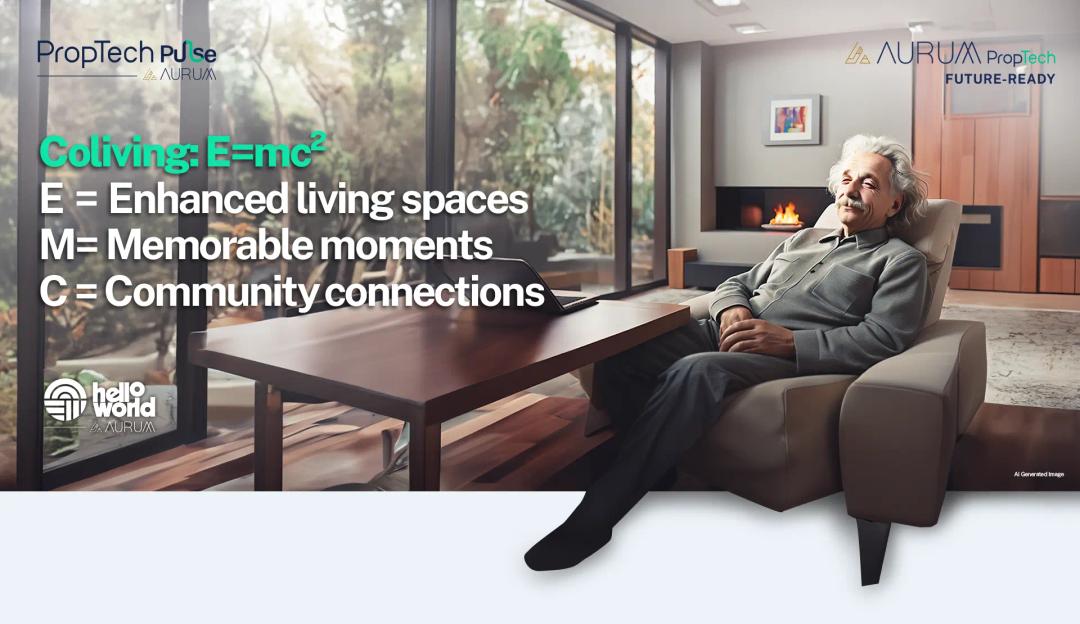
Dear Young Albert, I hope this letter finds you well, filled with the same curiosity and wonder that has always driven you. As I reflect on the world today, I can't help but think about how much has changed since my time, especially in the realm of communal living which might seem quite intriguing to you. You see, much like the principles of relativity that I delved into in my time, co-living operates on the idea of interconnectedness. Just as I discovered that the laws of physics are the same for all observers, regardless of their relative motion, co-living emphasizes the equality and inclusivity of all residents. Regardless of background or circumstance, everyone contributes to and benefits from the community space. These co-living spaces foster a sense of belonging and support that is invaluable, especially in today's fast-paced world. Just as I contemplated the effects of gravity on the motion of celestial bodies, consider the "community gravity" within a co-living space — the connections and relationships that draw residents together, enriching their lives in ways they never thought possible. Moreover, in these co-living spaces, one finds a beautiful confluence of diversity. Each resident brings their own unique perspective, skills, and passions to the table. Just as I theorized that the curvature of spacetime depends on the distribution of mass and energy, the social "space" within a co-living community is shaped by the collective presence of its members. This diversity creates an environment ripe for collaboration, innovation, and personal growth. Young Albert, Technology has altered Co-living manifold enabling students and young professionals discover, access and live in shared spaces at a touch of their fingertips. We individuals, each with their unique stories, come together to create a community unlike any other. It's not just about sharing physical space; it's about sharing ideas, dreams, and aspirations. So, my dear young Albert, as I continue to explore the wonders of the universe co-living has given me an opportunity to connect with likeminded others, to learn from them, and to grow together. Remember that just as the universe is vast and ever-expanding, so too are the opportunities for meaningful connections and shared experiences in the world around you. With warm regards, Your Future Self
15th March 2024

Home Loans Consumer
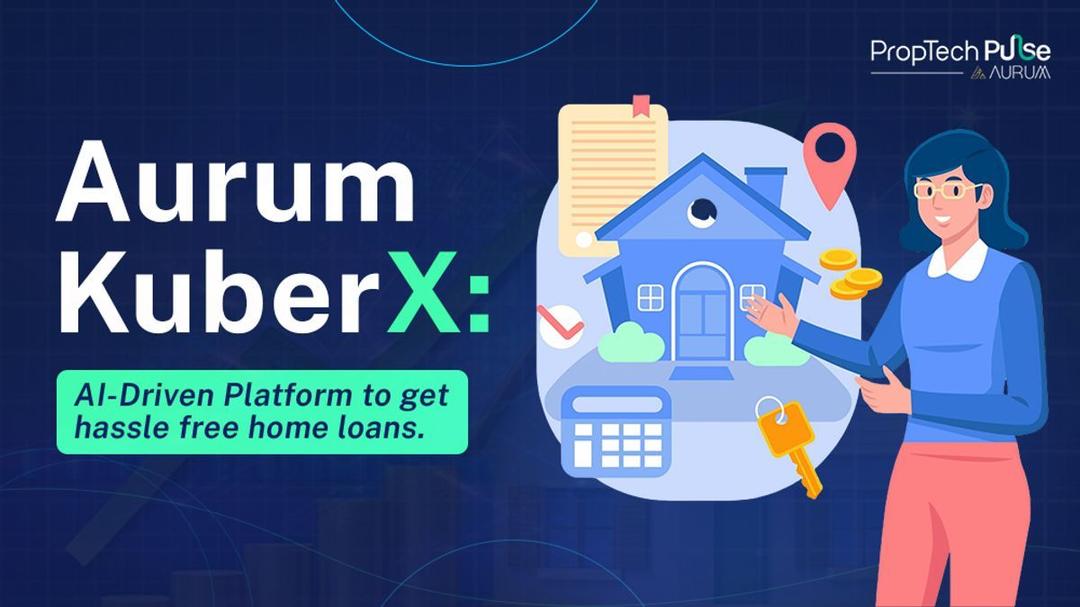
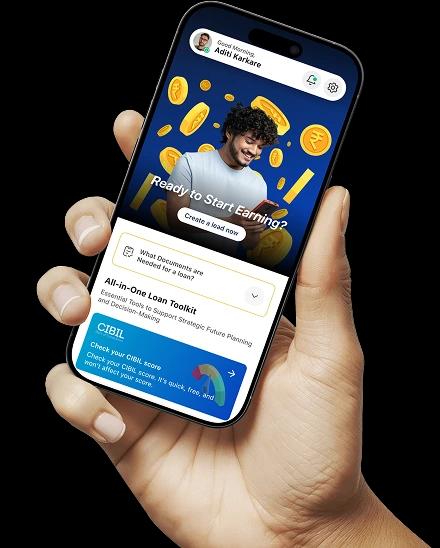
For many Indians, purchasing a ‘dream home’ tops their bucket list. Whether a modernized penthouse or a sprawling Victorian bungalow, every one of us desires a home that was crafted keeping us and our family in mind. Finding such a dream home is a difficult task. After a painstaking search, you finally find the house of your dreams, but to purchase it, you have to take out a home loan from a bank or any aggregator. Acquiring a home loan in India is an arduous and time-consuming battle itself. Currently, the home loan market in India is tremendous and has grown exponentially over the years. The home loan interests are at a 16-year low, with several banks and aggregators competing to provide the most lucrative options. Despite these developments, an average home-loan seeker has to bear a tedious loan approval process that can be demoralizing due to the number of hurdles. To overcome these hurdles, KuberX, a tech-based online loan aggregator platform, has implemented innovative solutions to turn your home loan searching process into an effortless one. What stands in the way of home loans? Long-drawn-out procedure for approval Getting to the end of the home loan process requires patience. Even with banks and aggregators offering pre-approved loans, you may find yourself with incomplete documentation, and a prolonged legal and technical verification process that stalls loan approval by weeks. Non-transparent payment process There is a lack of knowledge in most borrowers, due to which they are not vigilant enough while comparing and scrutinizing interest rates. Legal and technical costs ranging anywhere from 0.25% to 1% of the entire loan are sometimes concealed by banks in the processing charges. How does KuberX tackle these challenges? Provision of APFs An APF or approved project finance is a score significant for any project. To get an APF number, the property developer must submit all legal documentation relevant to the project like NOCs, Sale Deeds, Title Deeds, Approved Plans, etc. KuberX can help facilitate APFs from multiple finance institutions for real estate developers. This provision increases homebuyer purchasing capability and assures a minimum risk of payment on the loan. Financial consultation Since purchasing your dream home is a monumental decision, it is advantageous to have an unbiased financial advisor by your side throughout the process. KuberX provides you with sound financial advice, backed by insights, to select the right loan product. Loan disbursements KuberX is simplifying the home loan buying journey through loan disbursements. They are working as an aggregator of demand across real estate developers and individual customers for the banking system. Their expert team will coordinate with loan buyers for quicker sanctions and disbursements. End-to-end service For an individual, especially a first-time home loan seeker, the loan buying process can be intimidating. KuberX provides complete guidance and support throughout the journey. They have a complete understanding of the pain points of the customers and offer end-to-end support. From APFs to custom-made loans for your projects, they guide you through every step of the process. How KuberX works KuberX has made acquiring a loan a straightforward process through their platform. You only have to: Sign up - Sign up or register on the platform in seconds and share your loan requirements. Compare offers - Get customised opinions with their proprietary AI-enabled instant tool. Select offer - Choose one offer that best suits your home loan requirements. Relax - Just relax as they work on getting your home loan processed at the earliest. The real estate industry in India will continue its exponential growth and is projected to contribute around 18%-20% of the country’s total GDP. Since the home loan market is a part of the industry, it is also expected to boom along with the real estate industry. In a rapidly evolving landscape with complex dynamics, KuberX can be a trusted partner to help you seal the deal on your dream home. With their years of experience and expertise in the FinTech industry, KuberX wants to redefine the online loan aggregator ecosystem. Their associations with private, public banks, and NBFCs will aid them in tackling the prevalent challenges in the lending market.
24th October 2024

Investment Opportunities
The size of rental market in India is estimated to be USD 13.9 Bn by 2025. Around 50% of this is attributed to the Gen-Z population, and 30% to the millennial population. Demographic profile of India’s work force, changing behaviour of gen-Z and millennials, rapid urbanisation, digital behaviour and capital allocators preference are the five key factors are driving this increased trend in rental real estate. Demographic profile of the work force Around 52% of the Indian population comprises of Gen-Z and Millennials. In 2023, millennials constituted 70% of the Indian work force have emerged as the backbone of many Indian companies. Indian technology sector workforce comprises of 86% to 90% of Gen-Z and Millennial work force. The innate behavioural traits, real estate requirement patterns, lifestyles and purchasing power are often intrinsic to their nature of real estate consumption patterns. Changing behaviour of gen-Z and millennials. Internet penetration has shaped the consumer across industries including real estate. 50% of Gen Zs and millennials say they live paycheck to paycheck with high cost of living is their top societal concern. Big life decisions like buying a house and starting a family are often postponed to later stage. Ability to maintain a positive work/life balance and not live their life on their own terms, and not necessarily to live up to societal expectations. This has shifted the consumption pattern of with increasing demand for rental real estate. The behavioural pattern of consumers of community and experiential living with a value that meets their pocket has given rise to the Co-Living segment. Rapid urbanisation Industrial growth, rise of services sector has shaped rapid urbanisation. In India, contribution component of urban growth is segmented into three categories according to a study by International Institute for Population Sciences. In India, it is estimated that more than 500 million individuals, i.e. approximately 35% of the population stays in urban areas. As the decade progresses, India will witness addition of 100 million urban dwellers, which will further rise to 60% by 2050. (Ref: Macrotrends, Urban Development Ministry, Govt. of India) It is estimated that 28% of the urban households stay in rental housing. This number shall be higher in mega cities. The demand for rental living, is 5.7 million units across top 30 cities (Tier I, II, II) in the country -comprising of working singles living on rent (migrants and domicile) and unmarried student population. This together adds up to 5.7 million across top 30 cities (Tier I, II and III) in the country. Digital behaviour of consumers: There is a remarkable increase in internet penetration, adoption and consumption across enterprises and consumers in India. 700 Mn internet users across the country, 470 Mn social media users and 350 Mn digital payment users. 80% of digital consumers in India prefer searching and discovering new products online before visiting physical stores or seeking offline. 69% of digital consumers prefer digital communications for customer support and interactions. Convenience, value and trust are key drivers across most internet platforms with Capital allocators preference for real estate supply The sector interest has increased after a funding winter for two straight years. Investments in the sector dropped from USD 148 million in 2021 to USD 21.7 million in 2022 and USD 6 million in 2023. With strong fundamental demand backed by urbanisation, consumer behaviour and digitisation, institutional investors and global funds favour co-living and data centres as an alternative asset class. The understanding of private equity funds is also well defined in international markets where co-living is a mature sector. Recently, Singapore’s CapitaLand Investment announced CLARA II: A $600 Million private equity fund for serviced apartments and co-living properties. Brookfield Asset Management, which has a real estate AUM of USD 690 billion globally is also looking to invest more in the coliving, rental housing and serviced apartment asset class.
7th March 2024

Digital Transformation
Dear Young Albert, I hope this letter finds you well, filled with the same curiosity and wonder that has always driven you. As I reflect on the world today, I can't help but think about how much has changed since my time, especially in the realm of communal living which might seem quite intriguing to you. You see, much like the principles of relativity that I delved into in my time, co-living operates on the idea of interconnectedness. Just as I discovered that the laws of physics are the same for all observers, regardless of their relative motion, co-living emphasizes the equality and inclusivity of all residents. Regardless of background or circumstance, everyone contributes to and benefits from the community space. These co-living spaces foster a sense of belonging and support that is invaluable, especially in today's fast-paced world. Just as I contemplated the effects of gravity on the motion of celestial bodies, consider the "community gravity" within a co-living space — the connections and relationships that draw residents together, enriching their lives in ways they never thought possible. Moreover, in these co-living spaces, one finds a beautiful confluence of diversity. Each resident brings their own unique perspective, skills, and passions to the table. Just as I theorized that the curvature of spacetime depends on the distribution of mass and energy, the social "space" within a co-living community is shaped by the collective presence of its members. This diversity creates an environment ripe for collaboration, innovation, and personal growth. Young Albert, Technology has altered Co-living manifold enabling students and young professionals discover, access and live in shared spaces at a touch of their fingertips. We individuals, each with their unique stories, come together to create a community unlike any other. It's not just about sharing physical space; it's about sharing ideas, dreams, and aspirations. So, my dear young Albert, as I continue to explore the wonders of the universe co-living has given me an opportunity to connect with likeminded others, to learn from them, and to grow together. Remember that just as the universe is vast and ever-expanding, so too are the opportunities for meaningful connections and shared experiences in the world around you. With warm regards, Your Future Self
15th March 2024


Ask Pulse Ai anything about real estate

News, Infographics, Blogs & More! Delivered to your inbox.